Posts

Showing posts with the label Indexable drills

The Iso Designation System
Image
The standardized way to name an indexable insert is the ISO designation system (ISO 1832) for indexable inserts. The name of the insert is a code, and the code has all the essential features and dimensions of the indexable insert. Any type of indexable insert is available at  Sandvik coromant   distributor . There are several advantages of the ISO naming system. They are as follows:   The naming of indexable insert becomes supplier independent. That is, the naming system is unique to the inserts. The name contains all the essential dimensions and features of the indexable insert. The code names can even tell the insert carrier where the insert can be mounted. One important thing to remember is that the ISO system only standardizes the dimensions and features of the insert and does not standardize the insert's quality, carbide grade, or cutting geometry. Therefore you can get the insert of your choice from  buy Zccct Distributor online . ...

All That You Need To Know About Cutting Tools And Iso Inserts

Image
The two most essential tools in mechanics are the cutting tool and ISO turning insert. This article provides all the relevant information about the cutting tool and ISO inserts to help you quickly select and understand the tools. You can have the tool you desire from  cutting tool distributors  or turning inserts distributors. Cutting Tools A cutting tool is a sharp-edged instrument used to remove the excess material of the workpiece to attain the desired shape and size. There are two types of cutting tools available in the market. They are:   Single Point Cutting Tool : has only one cutting edge that can be cut in a single pass. They are primarily used in shaping, turning, planning, and other similar operations. Double/Multiple Point Cutting Tool : has two or more edges that can shear or cut in a single pass. This type of tool reduces shock through instability, vibrations, etc. ISO Inserts One needs to keep several things in ...

The Secret Mechanics of High-Feed End Mills

Image
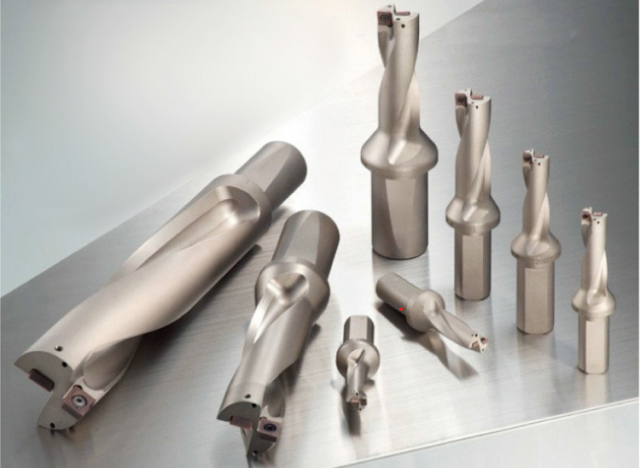
High-Efficiency Milling (HEM) tools, like the High-Feed End Mill, have an end profile designed to maximize feed rates through chip thinning. These cutters are designed to function at shallow axial depths, allowing the cutting action to occur along the bottom profile's rounded edge. Several phenomena are made possible by this:    Most of the  Indexable Drills  are returned axially into the spindle due to the small lead angle. Because there is substantially less radial force forcing the cutter off its central axis, deflection is reduced. Due to the bottom edge's expanded curved profile, feed rates can be increased without compromising chip thickness.    What Does It Do?    The process with a lot of Feeding    The die & mold sector was the first to use high-feed milling, a machining technique that combines a shallow cut depth (DOC) with a high feed rate of up to 2.0 mm for each tooth. This setup maximizes metal removal a...

Are traditional tools better than today's one?

Image
While many turning tools are accessible, the difficulty of which tools to purchase can be separated by knowing numerous basic principles. For the beginner turner, this can be limitless so as not to burn through every last dollar purchasing device that will never be utilized or utilized so rarely as to be not worth the price tag. What are turning tools called?   A lathe turning tool is a machine utilized fundamentally to mold bits of substance, wood, or different accessories by causing the piece to be held and rotated while a tool cuts and shapes it.   Startlingly, the  Japanese turning tools  used long ago are the same as we use today. The genuine change has been in the metal that makes them up. Stone gave way to bronze, iron, and steel; presently, steel has various substance pieces that give it different edge holding and sharpening qualities. That edge must be sharpened and introduced to the turning wood so that shaving curl off the material and a turned p...